
5
BioDryers
100% of required capacity
BIOFORCETECH / PLANT BUILDER
A better future for your biosolids.
Start with your plant.
See what it could become.

Plant Configuration
Calculated automatically from the plant inputs.
5
BioDryers
100% capacity
Required range calculating…
0
Pyrolysis
0% capacity
Not included
69%
Weight reduction
3,000 → 938 t/yr
Click the first point
Innovative WWTP
Loading plant model...
The bottom line
Less to haul. More to look forward to.
Your Plant Name
BioDryer drying system
- Annual input
- 3,000 wet tons
- Max weekly capacity
- —
- Dry solids
- 25%
- Type of sludge
- Unknown

0
SigmaOne Pyrolysis
Add pyrolysis to make OurCarbon
Biosolids in
3,000
wet US tons / year
Class A biosolids out
938
tons / year
Fewer truck trips
115
fewer truckloads / year
Class A status and end uses depend on validated operating conditions, testing, and applicable requirements.
Size your plant with our team
Every figure above updates live from the configuration you just built.
Planning estimates based on your inputs and the calculator’s operating assumptions. Final capacity and product specifications are confirmed during engineering.
YOUR PLANT / ENERGY
Energy, in balance.
Preliminary annual process estimates, with Sigma heat returned to the BioDryers when installed.
YOUR PLANT / MAINTENANCE & SPARE PARTS
Estimated Maintenance and Spare Parts Costs
Your annual maintenance and spare-parts estimates, scaled to the equipment in your plant.
YOUR PLANT / FEEDSTOCK
Feedstock Requirements
BioDryer
The BioDryer is designed to handle a wide range of biosolids and sewage sludge types that have been dewatered by centrifuge or other mechanical methods. To ensure stable and efficient operation, the material fed into the BioDryer must meet the following key characteristics:
| Characteristic | Requirement |
|---|---|
| Solids content | 25% Occasionally down to 17% is acceptable if not sustained. |
| Particle size | 95% must be ≤10 mm in diameter. |
| Physical consistency | Material must be shovelable and not form large clumps when conveyed. |
| Carbon content | >50% |
| Inlet temperature | >15 °C at the point of entry into the BioDryer. |
Meeting these specifications is essential to guarantee the efficiency and reliability of the drying process. Material that falls outside of these parameters may reduce performance or lead to shutdowns. A full sludge analysis is strongly recommended prior to system installation to ensure compatibility with the BioDryer.
Sigma-One
The Sigma-One pyrolysis unit is engineered to process high-solid-content biosolids and other organic materials efficiently and reliably. To ensure optimal system performance and stable operation, the feedstock must meet the following essential criteria:
| Characteristic | Requirement |
|---|---|
| Solids content | ≥80% |
| Particle size | <10 mm |
| Energy content | >9,000 kJ/kg |
| Carbon content | >50% |
| Sulfur content | <4% |
Meeting these characteristics is critical to maintaining efficiency, emissions compliance, and equipment longevity. A full feedstock analysis is strongly recommended to verify suitability for processing in the Sigma unit.
YOUR PLANT / FACILITY
Facility Requirements
The Bioforcetech system is designed with modularity and ease of integration in mind, allowing for straightforward installation within existing facilities. No major civil infrastructure is required beyond a basic cement pad and a light protective cover to shield the equipment from rain, snow, and direct sunlight.
The system is engineered to operate in outdoor environments with temperatures ranging from –5 °C to 35 °C, eliminating the need for an enclosed building under most conditions.
To operate, the following utility connections are required in most cases:
| Utility | Requirement |
|---|---|
| Fuel supply | Natural gas line or propane tanks |
| Electrical supply | Three-phase power, 380–480 V, 50 Hz or 60 Hz |
| Water | City water connection with at least 3 bar of pressure |
| Drainage | Water discharge line |
| Internet | Internet connection |
A more detailed and site-specific list of requirements will be provided during the design and engineering phase to ensure proper planning and integration.
02 / THE TECHNOLOGY
Work with nature.
Build for your plant.
Biology does the heavy lifting. Thoughtful engineering makes it work at your scale.
BIOLOGY, PUT TO WORK
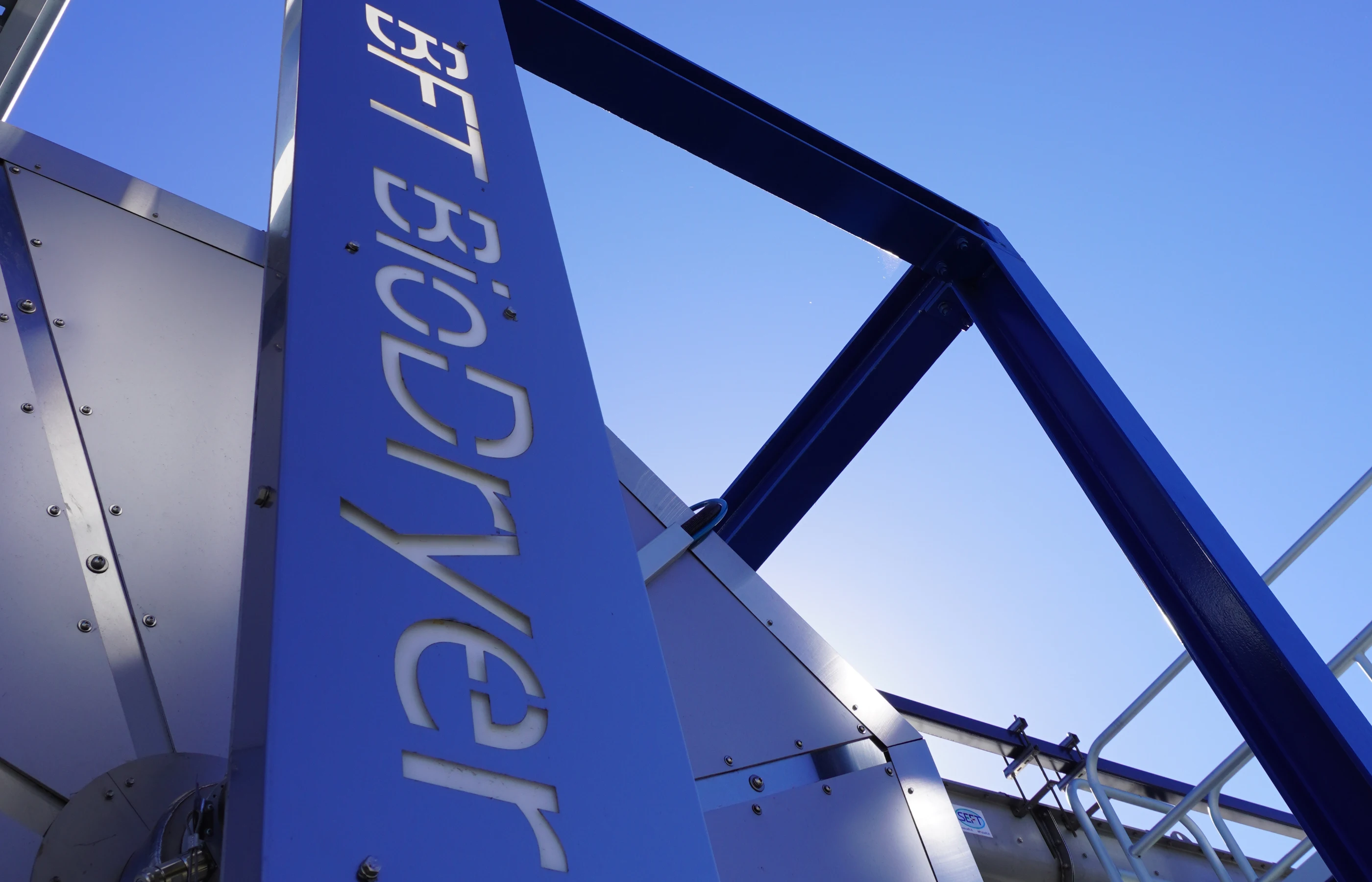
The BioDryer.
Naturally occurring bacteria generate heat inside the biosolids. Controlled airflow supports that biological activity and removes moisture; a final stage of added heat completes the drying cycle.
Each modular unit works independently, so plants can add drying capacity in stages. Automated controls help operators manage the process.
3units in your plan
-50%energy compared to traditional drying
Class Adepending on local regulations
THE NEXT TRANSFORMATION
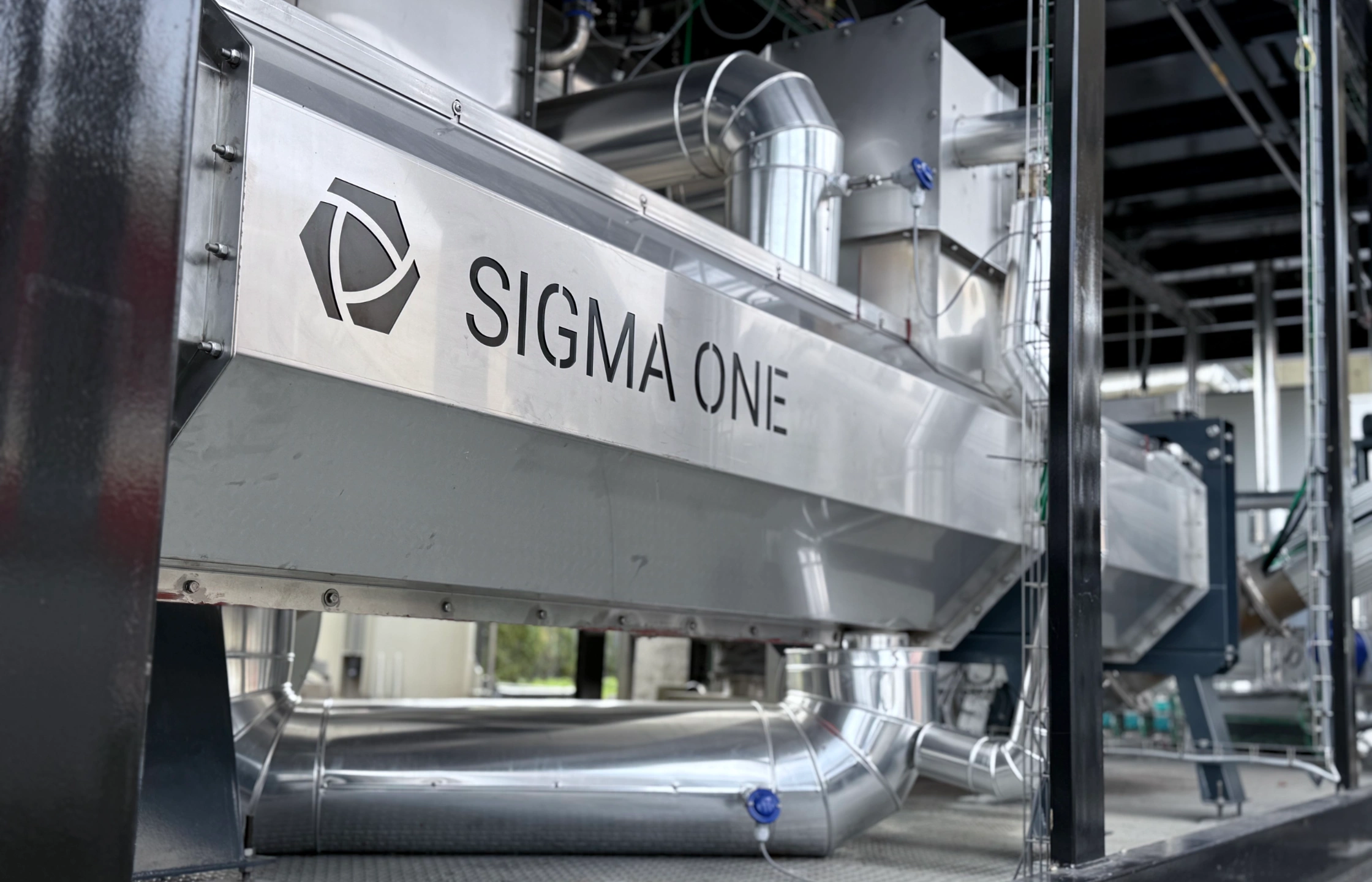
Meet SigmaOne.
Selected for your plant, SigmaOne converts dried organic material into biochar through controlled pyrolysis. Its hybrid system combines recovered process heat with electrical heating to regulate carbonization.
A continuous, automated process in a compact modular unit, designed around consistent temperature and residence time.
0units in your plan
500–700°Cpublished temperature range
10–30 minpublished residence time
FROM YOUR PLANT. INTO THE WORLD.
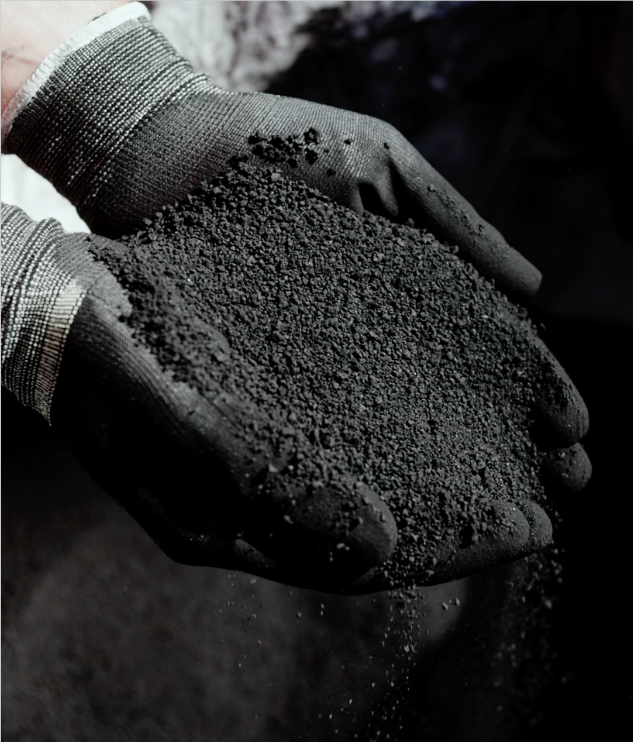
This is OurCarbon®.
Your biosolids can be the beginning of something useful. Bioforcetech develops applications for biosolids-derived biochar in concrete, inks, and other materials.
Material development and off-take are part of the conversation from the start. Talk with BFT about product requirements and an off-take arrangement for your plant.
—estimated US tons of OurCarbon / year from your configured process
PFASEliminated
THE BIOFORCETECH APPROACH
Nature is awesome.
Let’s build like it.
Bioforcetech’s mission connects organics management with resource recovery. The aim is simple: give communities a practical way to turn the end of one process into the start of another.
See a resource.
Design around the useful material and energy within organic residuals.
Make room to grow.
Start with the capacity your community needs and plan for the next chapter.
Put operators first.
Bring equipment, automation, and support together around day-to-day plant operations.
IN THE FIELD / USA & ITALY
Real plants.
Real progress.
A few of the communities already putting Bioforcetech technology to work.
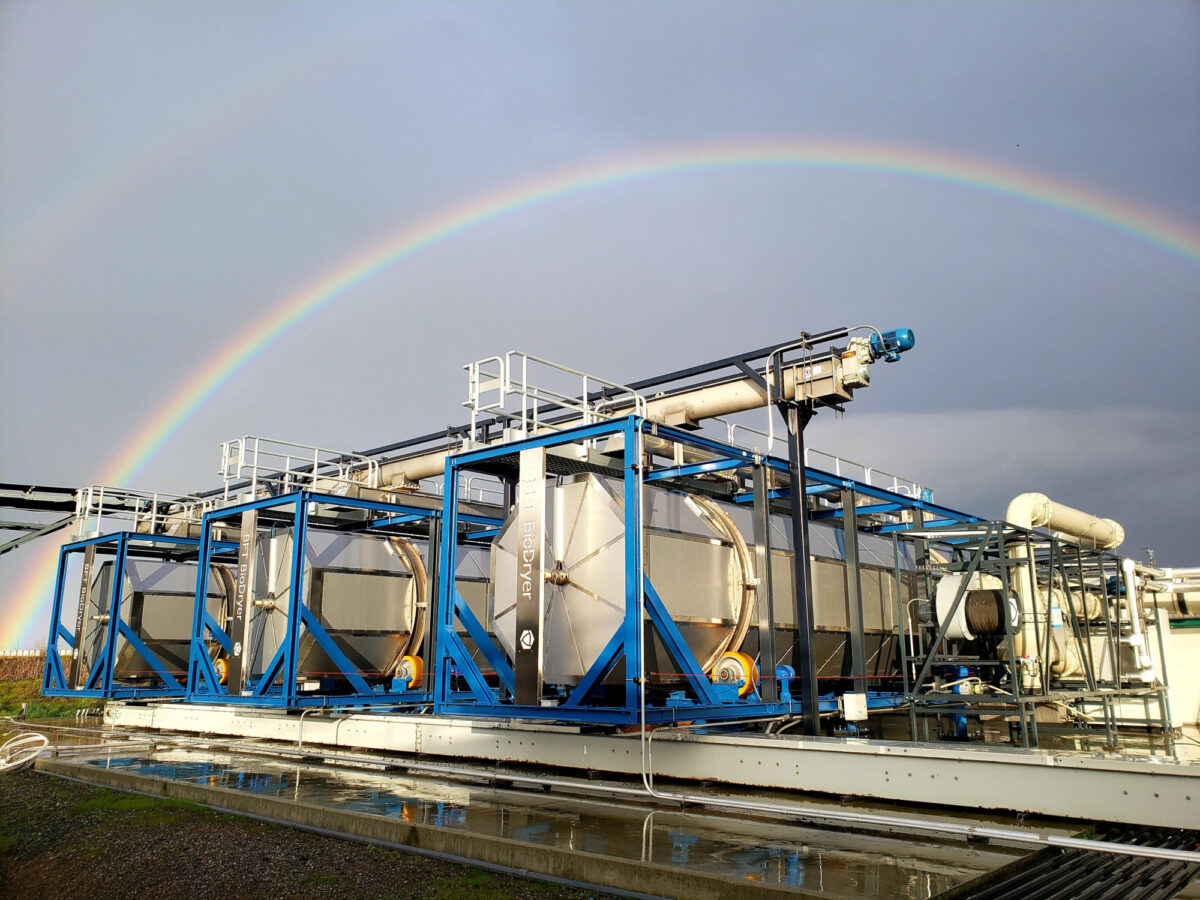
REDWOOD CITY, CALIFORNIA
Silicon Valley
Clean Water
Operating since 2017
3 BioDryers + 1 SigmaOne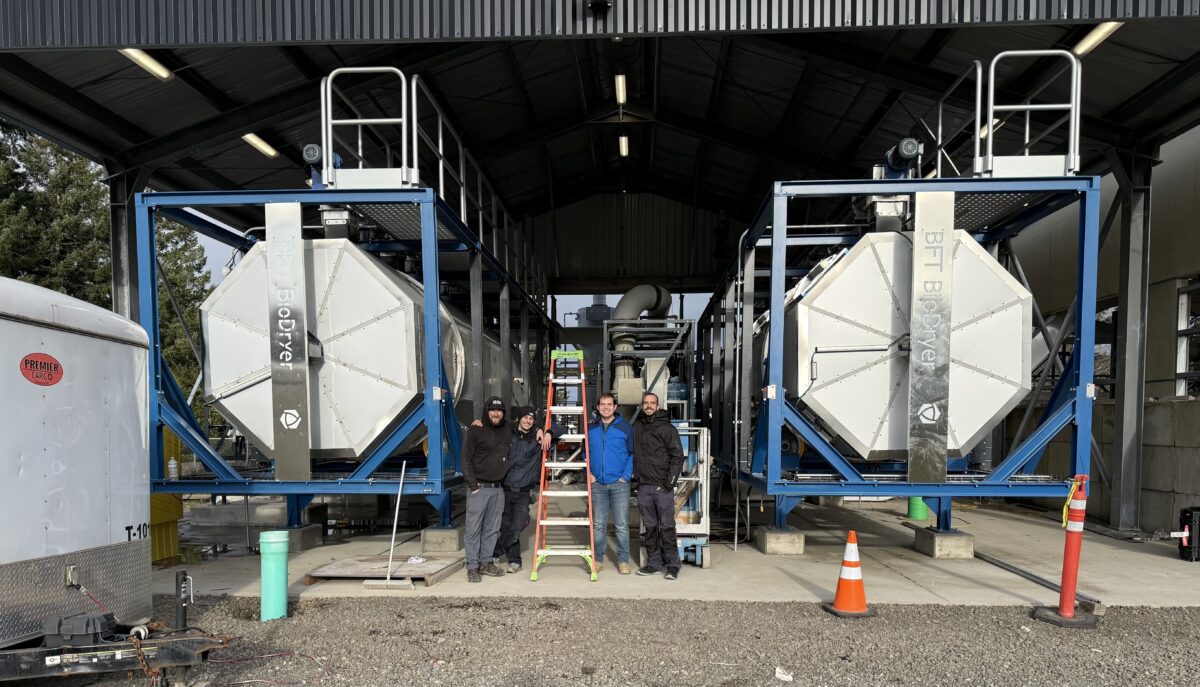
YELM, WASHINGTON
City of Yelm
Operating since 2026
2 BioDryers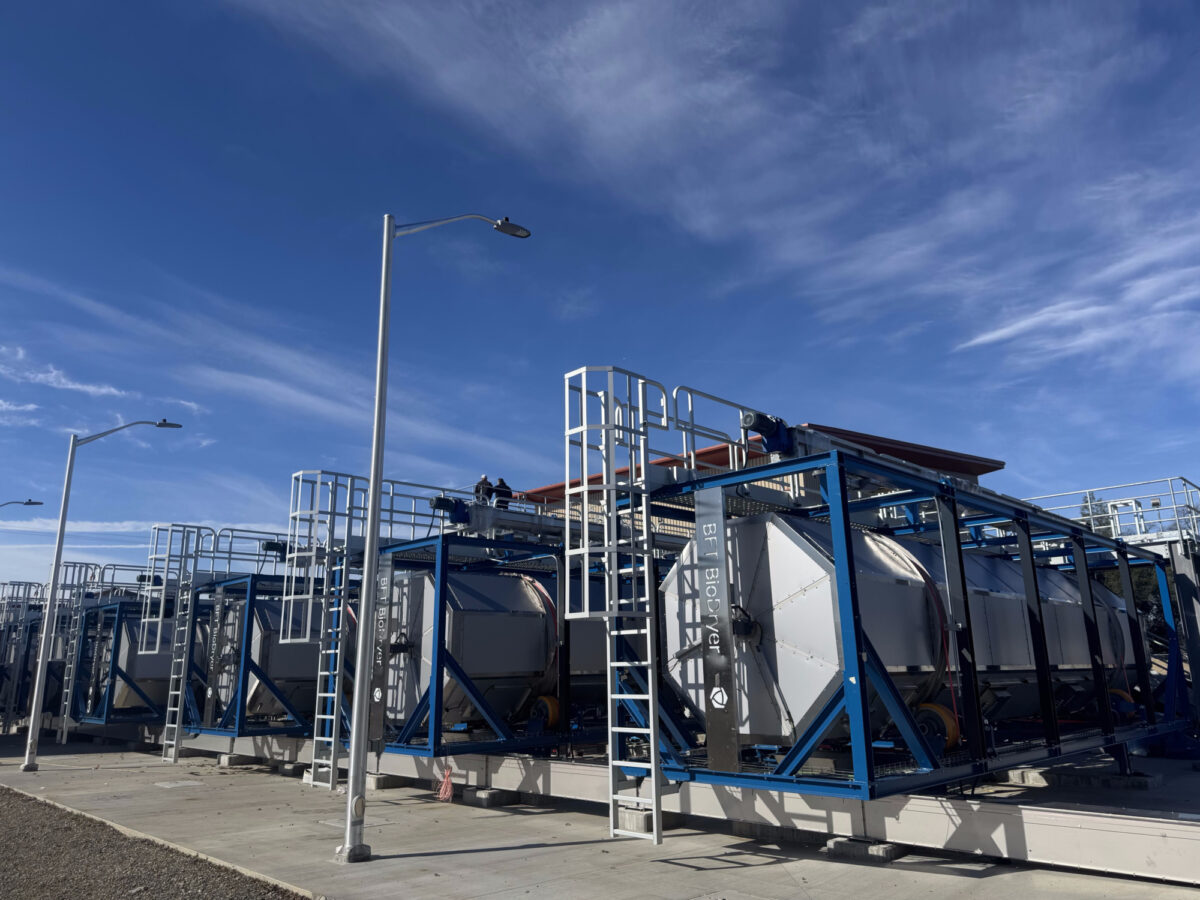
REDDING, CALIFORNIA
Clear Creek
Operating since 2024
6 BioDryers + 1 pyrolysis unitSelected references from BFT’s published installation list. Equipment shown here is a selection of each site’s systems. Source reviewed September 2026.
View the full installation list